Recognition as raw material
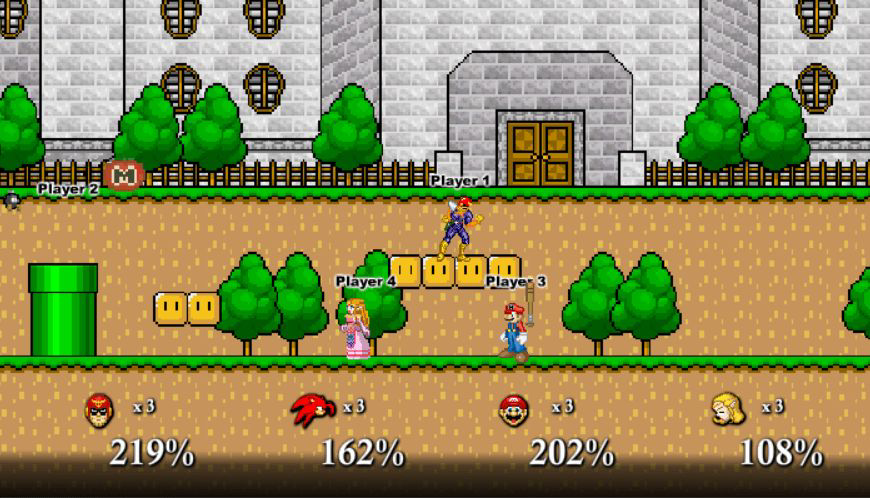
Super Smash Flash begins with characters players already know, then treats that familiarity as permission to experiment. Fighters from separate worlds meet on the same stage, creating matchups that once belonged only to playground arguments and fan drawings.
Ambition inside a browser
A crossover fighter requires movement, attacks, arenas, effects, artificial opponents, and multiplayer controls. Compressing those systems into a Flash game was an ambitious act. Rough edges became evidence of how much the creators were attempting rather than reasons to dismiss the project.
Fans read characters differently
An official adaptation must protect a brand. A fan game can emphasize whatever feels most memorable. A signature pose may become an attack, a familiar location may become a battlefield, and tiny references can reward players who understand the source material.
The keyboard becomes a couch
Local matches turn one computer into a crowded social space. Players negotiate keys, lean around each other, and argue about improbable victories. The physical awkwardness strengthens the memory because competition happens both on the screen and around it.
A playable wish list
Super Smash Flash matters because it transforms enthusiasm into something interactive. It does not simply imagine a crossover. It asks players to test the fantasy through movement, timing, and rivalry. That leap from admiration to creation captures the generous ambition of the fan made web.