The room begins to move
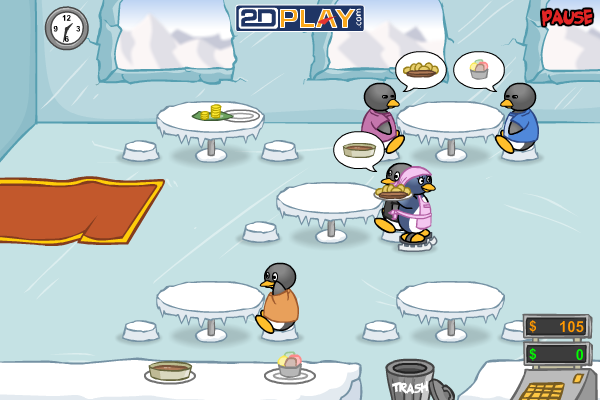
At opening time, the diner feels manageable. A guest arrives, takes a seat, orders, eats, and leaves. Soon several tables occupy different stages of that sequence. The room becomes a collection of overlapping clocks, and the player must keep all of them moving.
A route through the rush
Efficiency depends on combining trips. Taking an order on the way to deliver food saves seconds. Clearing one table before seating another prevents a bottleneck. The best play resembles choreography because every movement prepares the next one.
Patience has a face
Customers communicate mood through visible reactions. Their declining patience gives urgency a human shape, even when the diners are cartoon penguins. A delayed plate matters because someone is waiting for it, and a generous tip feels like direct recognition of good service.
Upgrades change the rhythm
Improvements are most valuable when they remove friction from the routine. Faster movement, better equipment, and stronger patience create breathing room during crowded periods. Progress can be felt in the pace of the room before it is noticed in the score.
Cozy pressure
Penguin Diner balances stress with warmth. The setting is bright, the goals are clear, and every difficult shift ends. Pressure becomes satisfying because it produces order rather than chaos. When the final table leaves happy, the quiet room feels earned.