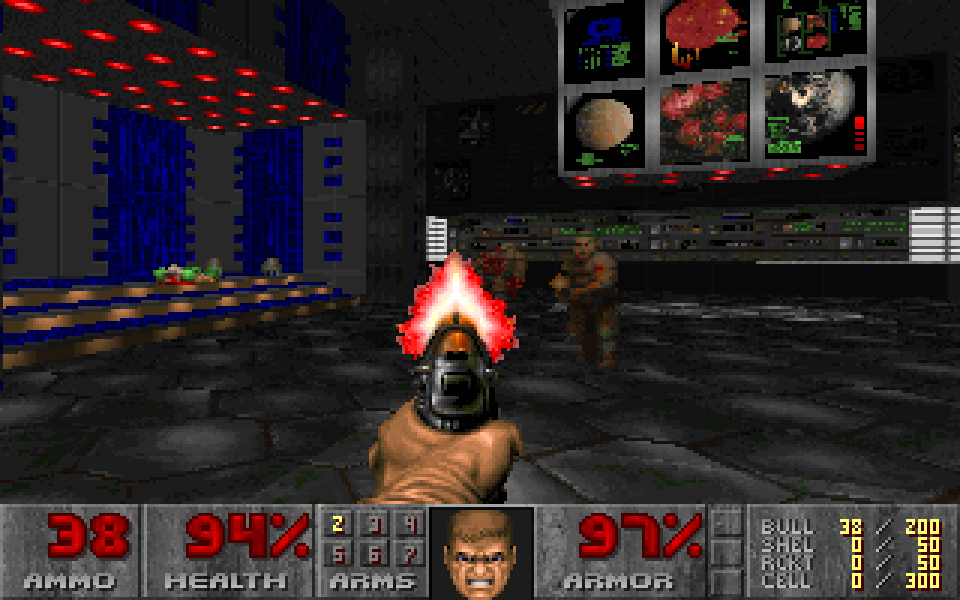
An impossible tab
Opening Doom inside a browser once felt slightly absurd. The same window used for email, homework, and simple web pages suddenly contained corridors, keycards, demons, and a famous arsenal. The surprise was part of the experience before the first door opened.
Recognition does the work
Doom carries a visual and mechanical identity strong enough to survive unusual ports. The status bar, weapon rhythm, enemy silhouettes, and maze like spaces remain instantly recognizable. Even compromises reveal how few ingredients are needed for the game to still feel like Doom.
Ports as public experiments
Browser versions were demonstrations as much as entertainment. They showed what a runtime could handle and invited players to test the boundary themselves. Performance quirks became part of the fascination because every working room proved that the technical stunt was real.
The web absorbs everything
The history of browser games includes original work, fan projects, strange adaptations, and attempts to make established software run where it was never expected. Doom belongs in that story because its presence changed assumptions about what a web page could contain.
More than novelty
The technical trick would not matter if the underlying game lacked durability. Doom remains compelling because movement is quick, spaces are readable, and danger arrives with unmistakable sound and shape. The browser adds astonishment, but the design keeps the player moving after astonishment fades.